Story 47DX/NS001
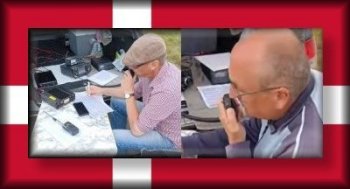 Story from 47DX/NS001 activity.
Story: The static hissed in the headphones, a steady, crackling baseline against the backdrop of the North Sea.
For radio operators, this wasn't noise at all - it was the sound of potential. Jesper (47DX109) and Finn (47DX011) were standing on the rugged coastline of Romo Island, designated as IOTA Region EU-125. It was Saturday July 25th. The mission was simple but critical: a full-scale field test of Jesper’s newly acquired radio equipment before his upcoming major activation of Anholt Island (47DX/NK001) in September 2026.
The day had begun long before dawn. At 06:00 UTC, Jesper pulled up to Finn’s QTH. We quickly packed the car with transceiver, Skypper antenna, amplifier, and coaxial cables, making the brief 35-minute driving across the 10 km. (Romo dam) causeway. Two weeks of prior scouting by Finn had secured them a perfectly isolated DX location on the island. However, the WX gods were not cooperating. The morning forecast brought a sudden update: severe winds were rolling in early with heavy rain tracking for the evening.
There was no time for a leisurely setup. Working against the clock, they hoisted the fiberglass mast. The wind tore across the flat terrain, threatening to snap the structure. We had to quickly adjust the guylines, driving the heavy ground anchors deep into the Danish soil to stabilize the antenna. Opening the Pile-up at exactly 08:45 UTC, the rig hummed to life "CQ CQ from 47DX/NS001, Romo Island QRZ." The response was instantaneous and deafening. The first station to burst through was 47DX101 John, pinning the S-meter straight into the red. The European propagation was wide open, and within seconds, a massive pile-up erupted across the frequency. Signals wall-to-wall at S9+ flooded the receiver. It was pure radio fun.
Finn took the first operator shift, fast - firing through callsigns with precision, logging an incredible 121 stations in the very first hour. When Jesper took the mic., the relentless pace didn't slip. He skillfully managed the chaotic wall of sound pulling out weak signals and managing close-range skip zones. Despite the short 300 to 400 km. baseline distance, stations from Belgium and the Netherlands were breaking through with surprising clarity. Chasing the greyline by 11:00 UTC, the band took a sudden dive. A light drizzle began to fall, and the wind intensified. The noise floor rose, and for a moment, it looked like the WX would cut the activation short. But short-wave radio is a game of patience. At 12:00 UTC, the atmospheric layers shifted. Suddenly, South American prefixes began leaking into the logbook. Realizing the solar conditions were morphing, they quickly rotated the antenna array toward the UK. The band didn't just open - it exploded. England, Wales, Scotland, Ireland, and Northern Ireland hammered the receiver with unbelievable signal strength. Then, the holy grail of the activation happened Through the thick European pile-up, a distinct, distant signal cut through the noise. Jesper focused, filtering the audio. It was 2OP095 - a station TX’ing from the United States. To work trans - Atlantic DX on their setup in the middle of a shifting afternoon band was an absolute thrill.
The contact went through cleanly, and the stations got logged with high-fives in the makeshift radio shack. Mission Accomplished. By late afternoon, the “storm” could no longer be ignored. The wind reached unsafe speeds for the mast, forcing us to pull the plug and QRT at 16:30 UTC.
Short before we packed down the gear in the swirling wind, we reviewed the logbook. The final tally was an undeniable success: 311 stations worked across 30 DXCC entities. The gear had survived the ultimate stress test of wind, rain, and heavy pile-ups. Jesper's equipment was officially battle-tested and ready for 47DX/NK001 IOTA: Anholt Island, EU-088 in Sep. 2026.
73 de 47DX109 Jesper and 47DX011 Finn - see you in the next pile-up!
return